
Mold Assessment in Mandeville for 1990s and 2000s Houses
A survey that checks what a newer house was built with on the room side of its walls, because that is where the summer water lands.
Mold Assessment quote in Mandeville
Tell us what you can see or smell, roughly where in the house it is, and whether the house is raised or on a slab. Those three things narrow it more than the size of the patch does, because they point at how the water is arriving rather than where it ended up.
Would you rather talk it through? Call (315) 640-3590.
$100 off your first job
Credited by us on your first booked job.
- One credit per customer per property, on your first booked job.
- Valid through December 31, 2026.
Mention this offer when you book. Full terms.
Mandeville's newer houses and inward vapor drive
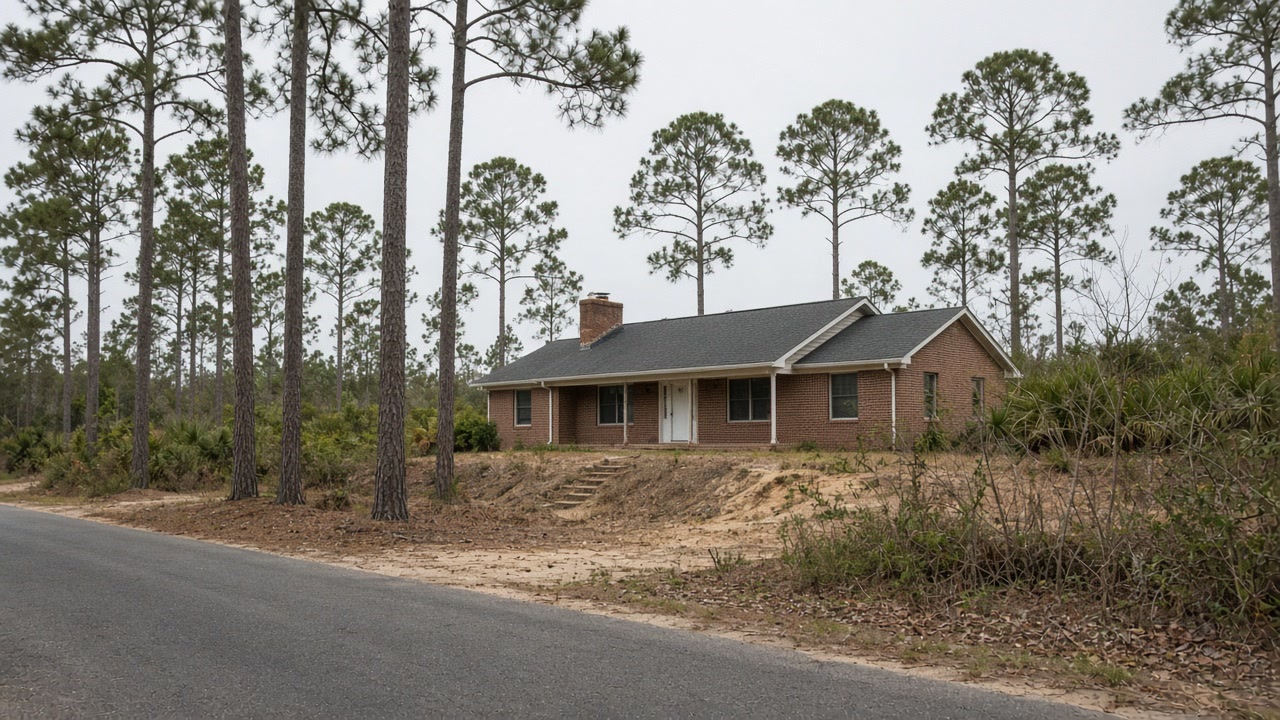
Mandeville has 6,003 housing units with a median year built of 1990 and only 26.1 percent of the stock predates 1980, the newest housing in this service area after Covington. 1,228 units were built in the 1990s and 1,076 between 2000 and 2009.
Source: United States Census Bureau, American Community Survey 2020-2024 five year estimates, accessed 2026-09-22
The guidance states that if the interior air of a home is relatively cooler and drier than the exterior air, water vapor will naturally migrate through the walls from outside toward the inside, and that where the wall contains a vapor retarder on the interior side of the insulation, the water vapor will condense on this cool, impermeable surface, with no way to dry to the interior.
Source: Pacific Northwest National Laboratory, U.S. Department of Energy Building America Solution Center, accessed 2026-09-22
The same LSU AgCenter guidance describes a different ideal assembly for mixed-humid climates, where moisture flow changes direction between the cooling and heating seasons and the wall has to dry in both directions, and names kraft paper-faced insulation toward the interior and smart vapor retarder membranes as assemblies suited to that case and not to the hot-humid case.
Source: LSU AgCenter, Bill Robinson and Claudette H. Reichel, Ideal Wall Assemblies for Hot-humid and Mixed-humid Climates, accessed 2026-09-22
Four things become the condensing plane on an exterior wall in this climate, and all four are on the federal and university lists of what not to do in a warm-humid zone: vinyl wallpaper, which the Building America Solution Center classes at 0.1 perm or less; oil-based interior paint, which the LSU AgCenter names; polyethylene sheet on the interior face of the studs; and foil-faced or kraft-faced batt insulation installed with the facing toward the room.
Source: Pacific Northwest National Laboratory, U.S. Department of Energy Building America Solution Center, accessed 2026-09-22
What a Mandeville survey looks for in a newer wall
A newer Mandeville house can grow mold inside a wall nobody has ever seen leak. 1,228 homes here were built in the 1990s and 1,076 between 2000 and 2009, and a tighter, heavily cooled house is the kind federal guidance describes exactly: when the indoor air is cooler and drier than outside, water vapor migrates inward through the wall, and where there is a vapor retarder on the interior side it condenses on that cool surface with no way to dry. The survey looks for that retarder. Kraft or foil-faced batts turned toward the room, polyethylene behind the drywall, and vinyl wallcovering are the usual candidates.

Batts, finishes and seasons in a Mandeville house
Check the insulation facing yourself before the visit if you can reach an attic or an open wall: note which way the paper or foil faces. The LSU AgCenter names kraft-faced insulation toward the interior as an assembly for mixed-humid climates, not hot-humid ones like this. If the growth is on the cavity side, the survey will show it with a small opening rather than a demolition. And the city of Mandeville holds Class 5, the deepest flood rating on the North Shore, on a 2012 map, which a buyer's lender may ask about.
Which way the insulation faces
Paper or foil facing toward the room is a mixed-climate detail. In a hot-humid house it is a likely condensing plane.
What is on the interior face
Vinyl wallcovering or oil-based paint on an exterior wall is on the LSU list of what to avoid here.
When the wall is damp
Summer damp with the air conditioning running points inward. Late winter damp at floor level points at the ground.
Can you see which way the insulation faces?
From the attic or an open wall. Tell us, and the Mandeville survey starts with a strong lead.
Mandeville removal after the survey
Mandeville survey questions about newer homes
Our Mandeville house is only 20 years old. How can the walls be wet?
Because the water is coming out of the air rather than through a leak. In summer the outdoor dew point here averages 75.2F in July, above the temperature a cooled room holds its walls at, so vapor moves inward through the wall. If something on the room side stops it, a faced batt, a plastic sheet, a vinyl covering, it condenses there. A newer, tighter house with strong cooling is where that shows up.
Is the ground in Mandeville part of the problem?
It can be, at a different time of year. Stough, one of the most mapped soils in St. Tammany Parish, carries a seasonal high water table about 1 to 1.5 feet below the surface late in winter and early in spring. Damp at floor level in those months points at the ground; damp on an exterior wall in summer points at the air. The survey measures both.
Send the Mandeville house, its year and the wall
A person reads it and says whether a survey is worth booking, or whether this is a finish you can change yourself.