
New Orleans, the surrounding parishes, and the North Shore towns across Lake Pontchartrain
Mold Removal in New Orleans, Starting With What Made the Wall Wet
The musty smell has a cause you can find. Tell us what you can smell or see, which room it is in, and whether the house is raised or sits on a slab, and you get a straight read on whether this is a leak, a cold surface your air conditioning is making, or nothing that needs removing at all, and what fixing it actually involves. Whoever writes that finding is never whoever sells you the removal, because Louisiana bars one company from doing both on the same property, and the work itself goes to vetted local contractors who are licensed and insured for it.
Request a Quote
Tell us what you can see or smell, roughly where in the house it is, and whether the house is raised or on a slab. Those three things narrow it more than the size of the patch does, because they point at how the water is arriving rather than where it ended up.
Would you rather talk it through? Call (315) 640-3590.
$100 off your first job
Credited by us on your first booked job.
- One credit per customer per property, on your first booked job.
- Valid through December 31, 2026.
Mention this offer when you book. Full terms.
Finding the water, taking out what it ruined, drying what can still be saved
Which of the three you need turns on two things: whether anything is still wet, and whether anyone has established where the water is arriving from. Water caught in the first day or two can often be dried in place, and the EPA describes acting inside 24 to 48 hours as the way to avoid needing a removal at all, so drying is its own job with its own clock and it is the cheapest outcome on this list. Past that window somebody has to work out how far the water went, and whether the wall is leaking or condensing, before anything is cut open. In Louisiana that finding has to come from a different company than the one doing the cutting.
Mold Assessment and Moisture Survey
Find out where the water is arriving, whether the wall is leaking or condensing, and whether there is a mold job here at all, in writing, from a company that is not the one selling you the removal.
Start here if there is a smell or a mark, and nobody neutral has established where the water is arriving from.
About Mold Assessment →Mold Removal and Remediation
Get the affected material out under containment, take the cause out with it, and have the work priced against a written scope that the removal firm did not write.
Start here if the water has been found and the material it got into has to come out.
About Mold Removal →Water Damage Drying and Flood Cleanup
Water out and the structure dried to a measured reading inside the 24 to 48 hour window that decides whether the material stays or comes out.
Start here if the water got in within the last few days, or a surface is still damp from an older leak.
About Water Damage Drying →Find out where the water is arriving first
Describe what you are looking at. The reply says which of four things you have: a survey, a removal, a dry out, or a wall that needs nobody.
How a New Orleans mold job runs
Find the water first, get the extent written down by somebody who is not bidding on the demolition, then price the work against that document.
Tell us what you smell, and what the house sits on
Send the form with your ZIP code and a few lines. Raised over an open or vented space, or flat on a slab: that one answer splits the job in this metro, because a raised house condenses under the floor and a slab house wicks a hidden leak up into the bottom of the wall. Before anyone comes out, we work out whether this is an assessment, a removal, a drying job, or nothing that needs us at all.
Dry what is still wet, then map how far the damp reached
The EPA puts the window at 24 to 48 hours, and material dried inside it in most cases will not grow mold. Here that means closing the house and running a dehumidifier rather than opening the windows, because outdoor air at a 75F dew point adds water to a wet building. Once it stops moving, the survey maps the wet material behind the finish, takes surface temperature and dew point together to separate a wall that is leaking from one that is sweating, and writes it up with readings and dated photographs behind every line.
A separate firm removes it, working to the written scope
The removal contractor prices the document rather than their own opinion of it, which is what stops a scope growing to fit the truck. Above $7,500 the firm doing the work has to hold a Louisiana mold remediation license and has to give you a written report; below that the statute asks for neither, so we ask for both anyway. When the work is finished, the space is rechecked against what the report said would be done.
What makes this a local problem

The NOAA thirty year normals for 1991 to 2020 at the New Orleans airport station put the mean dew point at 75.2F in July and 75.1F in August. Dew point is the temperature at which the air in question starts giving up its water, so on the average July day the outdoor air here will condense on any surface held below about 75F.
Source: NOAA National Centers for Environmental Information, 2023 Local Climatological Data Annual Summary with Comparative Data, NEW ORLEANS, LOUISIANA (KMSY), WBAN 12916, accessed 2026-09-22
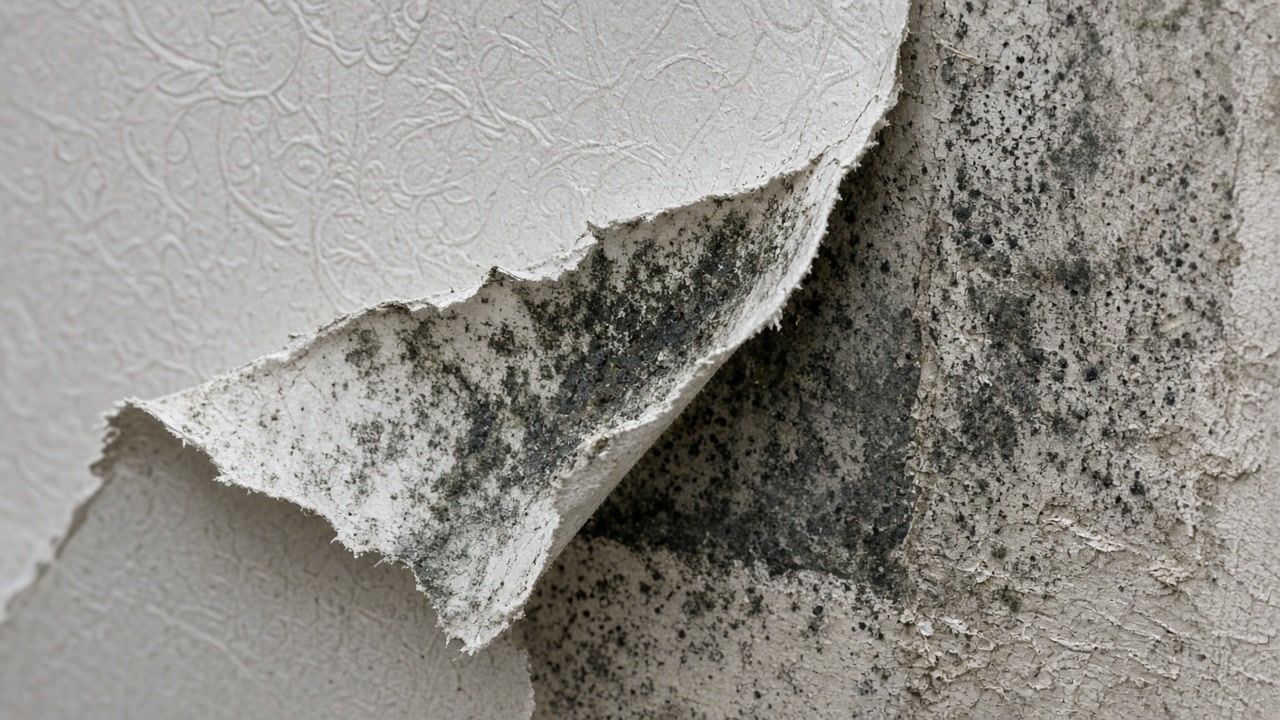
Four things become the condensing plane on an exterior wall in this climate, and all four are on the federal and university lists of what not to do in a warm-humid zone: vinyl wallpaper, which the Building America Solution Center classes at 0.1 perm or less; oil-based interior paint, which the LSU AgCenter names; polyethylene sheet on the interior face of the studs; and foil-faced or kraft-faced batt insulation installed with the facing toward the room.
Source: Pacific Northwest National Laboratory, U.S. Department of Energy Building America Solution Center, accessed 2026-09-22
Louisiana R.S. 37:2158(A)(19)(c) makes it a violation for a mold remediation contractor to perform both mold assessment and mold remediation on the same property.
Source: Louisiana State Licensing Board for Contractors, Contractors Licensing Law and Rules and Regulations, effective August 1, 2022, accessed 2026-09-22
The EPA advises drying wet materials within 24 to 48 hours. In New Orleans the outdoor air in that window carries a mean dew point of 75.2F in July and 75.1F in August, with mean relative humidity of 88 percent at 6am, so outdoor air brought into a wet building in summer adds water rather than removing it.
Source: NOAA National Centers for Environmental Information, 2023 Local Climatological Data Annual Summary with Comparative Data, NEW ORLEANS, LOUISIANA (KMSY), WBAN 12916, accessed 2026-09-22
Here the water usually comes out of the air, on the inside of the wall
Everybody in this city gets told the same thing: it is just humid down here. Humidity is everywhere here and mold is not, so whatever is different is something about your building. It is usually the coldest surface in the room, and the air conditioning is what made it cold.
NOAA's thirty year normals for the airport put the mean dew point at 75.2F in July and 75.1F in August. Dew point is the temperature at which air starts giving up its water, so a surface held below it gets wet with no leak, no storm and nothing broken. A cooled house holds an exterior wall right around that number, which means the average July day, not a bad one, is already at the condensing point. People here describe it exactly right when they say the wall is sweating.
What decides whether that ruins anything is the layer on the room side. Vinyl wallcovering, oil-based interior paint, polyethylene sheet behind the drywall, or foil-faced batt insulation turned the wrong way: all four are on the federal and LSU AgCenter lists of what not to build in a hot-humid climate, and each one stops the wall drying inward. The water lands on the back of them. That is why the smell arrives months before a stain, and why the stain, when it finally shows, looks like it has no source.
Why the survey and the quote never come from one firm here
The assessment and the removal are never the same company
Louisiana R.S. 37:2158(A)(19)(c) makes it a violation for a mold remediation contractor to perform both mold assessment and mold remediation on the same property, and subsection (d) closes the version where one owner holds both firms. That duty only attaches above $7,500 of work, which is more than most houses need. We keep the two in different hands at every price, so the removal is priced against a document it did not write.
We say when you do not need anyone
The EPA puts the do-it-yourself line at about 10 square feet, roughly a three foot by three foot patch, and says that where mold is visible, sampling is usually unnecessary. The CDC does not recommend mold testing at all. If what you have is a small patch and a high humidity reading, you will hear that from us instead of receiving a proposal.
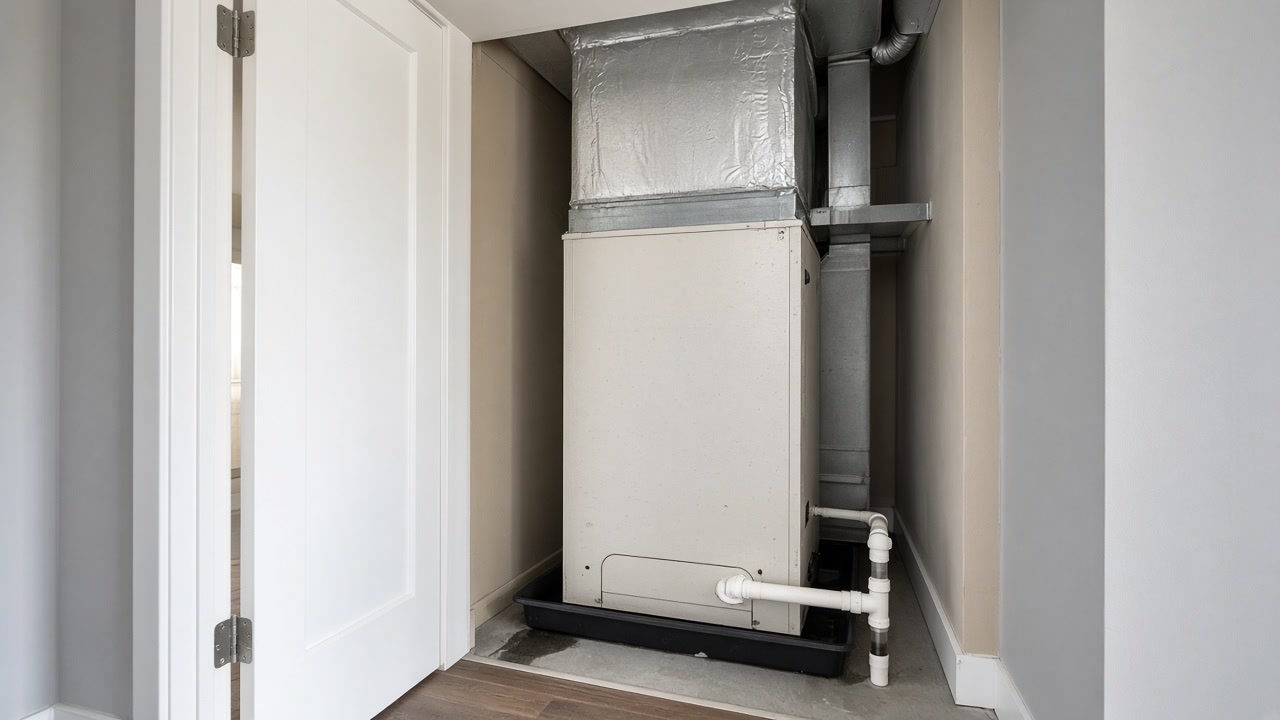
The air conditioning is treated as a suspect, not a bystander
Four things turn an exterior wall into the surface the water lands on in this climate: vinyl wallcovering, oil-based interior paint, polyethylene sheet on the room side of the studs, and foil-faced or kraft-faced batt insulation installed facing the room. Three of the four were put there by somebody who believed they were doing the right thing, usually working from a northern habit. An assessment here checks those before it goes looking for a pipe.
Two shores, two kinds of ground, two different repairs
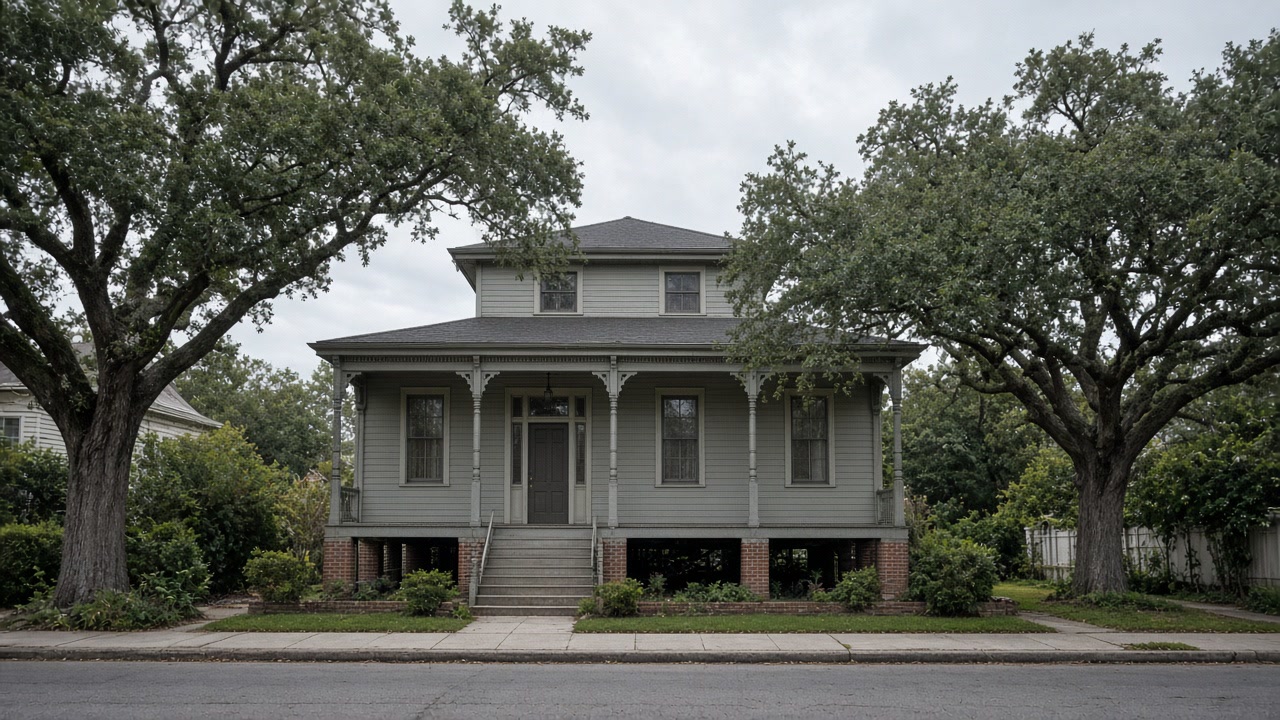
The USDA soil survey draws a hard line across this metro. New Orleans, Metairie, Kenner, Gretna, Harvey, Marrero, Westwego, Terrytown, River Ridge, Chalmette, Arabi and Belle Chasse sit on delta clays and organic mucks. Slidell, Mandeville and Covington sit on coastal plain sandy loams with fragipans and seasonal perched water tables. If the same drainage remedy is quoted on both sides of the lake, one of those two quotes is wrong.
Coverage across New Orleans, the surrounding parishes, and the North Shore towns across Lake Pontchartrain
What people ask before they hire anyone
Everyone tells me it is just the humidity down here. Is it?
Humidity is everywhere in this city and mold is not, so whatever is different is something about your building. Mold needs a surface colder than the dew point of the air touching it, or a leak. Both of those are specific to your house. NOAA's thirty year normals for the airport put the mean July dew point at 75.2F, which is at or above the temperature a cooled house holds an exterior wall at, so the room's own air conditioning can make the wet surface with nothing broken anywhere in the building. That has a location and a cause. It is findable, it is usually fixable, and it is not simply the weather.
There is a patch of mold on the bathroom wall. Do I need anyone at all?
Probably not, and this is the request we most often talk someone out of. The EPA's line is about 10 square feet, roughly a three foot by three foot patch: under that, in most cases a homeowner can handle the job themselves. The EPA also says that where you can see the growth, sampling is usually unnecessary, and the CDC does not recommend mold testing at all. Buy a hygrometer before you buy anything else and find out what the room actually reads. What would change the answer is growth that keeps returning in the same place after you clean it, because that is a moisture source rather than a cleaning problem.
Is this going to cost thousands of dollars?
It depends on what is behind the wall, and anyone who gives you a number before looking is guessing. What moves the price is how much material is wet, whether the cause is a leak or a cold surface, how far containment has to reach, and what has to be rebuilt afterward. We do not price the work and we do not quote it: the contractor does that, in writing, after seeing the property. Our guide on what changes the price of a mold job sets out the things that actually move it, so you can tell whether a number you have been given is a reasonable one.
A company looked at it and said the whole wall needs remediating. Should I believe that?
Get the finding from somebody who is not selling the removal and the question answers itself. Louisiana R.S. 37:2158(A)(19)(c) makes it a violation for a mold remediation contractor to perform both mold assessment and mold remediation on the same property, and subsection (d) blocks the version where one owner holds both companies. The rule exists because an opinion written by the firm that will be paid to act on it is worth less. It only attaches above $7,500 of work, so on a smaller job nothing in state law keeps them apart, which is exactly when it matters most that somebody does. You can also check a license yourself: the state licensing board publishes a Contractor Search you can query by name, license number, city and parish at https://arlspublic.lslbc.louisiana.gov/Public/DetailedSearch/
Water got in two days ago. Is it a mold job yet?
Not necessarily, and what you do over the next day or so decides it. The EPA's window is 24 to 48 hours: material cleaned and dried inside it in most cases will not grow mold. The local correction matters more than the clock. Do not open the windows. Outdoor air here carries a mean dew point of 75.2F in July and a mean relative humidity of 88 percent at 6am, so airing a wet room out in summer brings water in rather than taking it away, and the EPA wants an indoor room under 60 percent. Close the house, run the air conditioning and a dehumidifier, and measure the room instead of guessing. If it dries, there may be nothing here for anyone to remove.
If I have it removed, will it come back?
If the cause is still there, yes. The EPA is blunt about it: there is no practical way to remove every mold spore from an indoor space, and the way to control indoor growth is to control moisture. So the cause is the job, not the stain. A removal that takes out the ruined material and leaves the cold wall, the vinyl wallcovering or the slab leak exactly as it was buys you a season. Nobody can make a house in this climate immune, and a company that tells you otherwise is describing a sale rather than a building.
Show us the wall and we will say what it is
A person reads every request and writes back. Sending it commits you to nothing, and no sales line rings you afterward.