
New Orleans, the surrounding parishes, and the North Shore towns across Lake Pontchartrain
Water Damage Drying for New Orleans Homes
Water out and the structure dried to a measured reading inside the 24 to 48 hour window that decides whether the material stays or comes out.
Water Damage Drying quote
Tell us when the water arrived, what it came in through, and whether anything is still wet right now. Those three tell us whether this is drying or removal, and knowing them on day one is worth far more than knowing them on day three.
Would you rather talk it through? Call (315) 640-3590.
$100 off your first job
Credited by us on your first booked job.
- One credit per customer per property, on your first booked job.
- Valid through December 31, 2026.
Mention this offer when you book. Full terms.
Why the first two days decide what this costs you
Water out, machines in, and the structure dried to a measured reading inside the window that decides what this ends up costing. The EPA puts that window at 24 to 48 hours and states that materials dried inside it will in most cases not grow mold: material dried in time is material you keep, material still wet after it is material that comes out. That is the whole reason to act today rather than at the weekend. What makes it bite in New Orleans is that the usual advice does not work here. Opening the house imports water rather than removing it: the airport normals put the annual mean relative humidity at 76 percent and 88 percent at six in the morning, against an EPA target of below 60 percent indoors, and a July mean dew point of 75.2F is already saturated at 75F. There is no hour of a summer day when outdoor air will get a room under the EPA number. Reaching it is a purchase, a dehumidifier working alongside the air conditioning in a closed house, not a habit. And the water reaches the property line more often than people expect: the Sewerage and Water Board states that once its system fills it can move about half an inch of rain an hour, and that an inch in an hour will most likely outpace it, in a city whose normal rainfall is 63.35 inches a year.
- Extraction of standing water, and removal of saturated carpet, pad and anything porous that is already past saving
- Moisture mapping before anything is moved, so the wet area is measured rather than guessed at, and so there is a record of it from day one
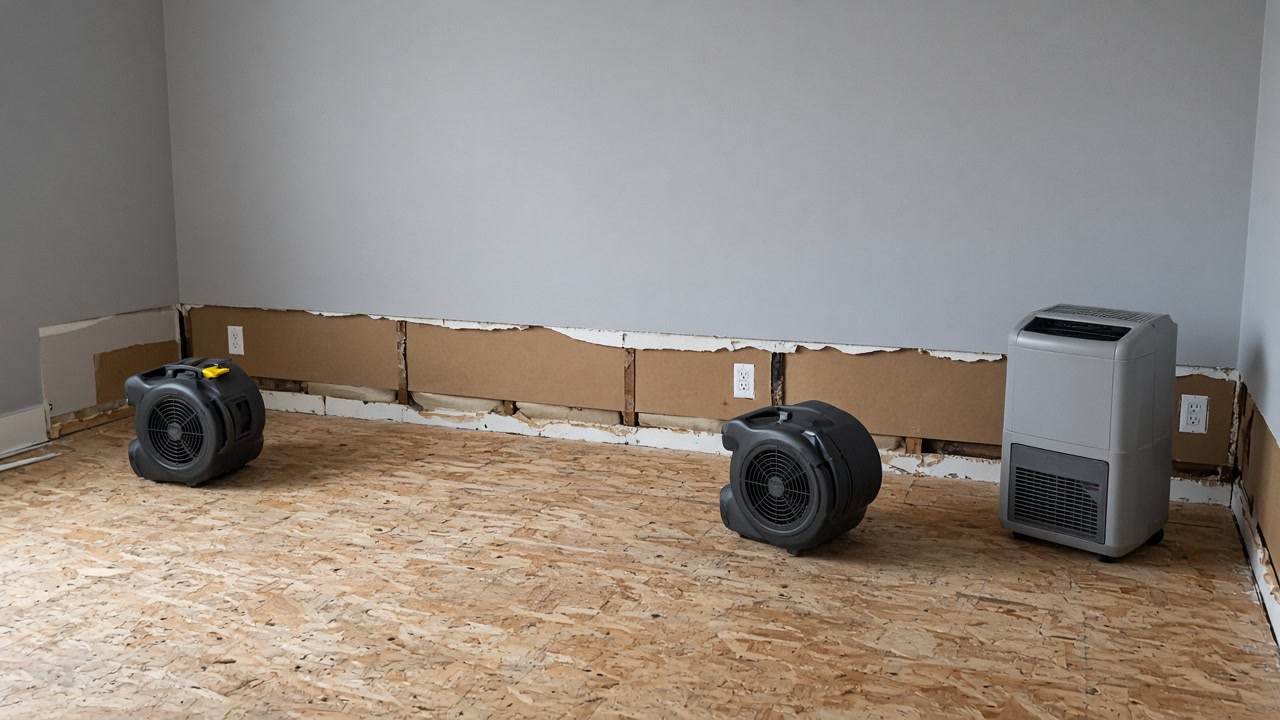
- Closed-house drying: dehumidification and air movement with the house shut and the air conditioning working alongside the equipment, because ventilation is the wrong tool in this climate
- Drying a slab and the wall above it, where water travels sideways through concrete into the bottom plate and shows up a foot from where it came in
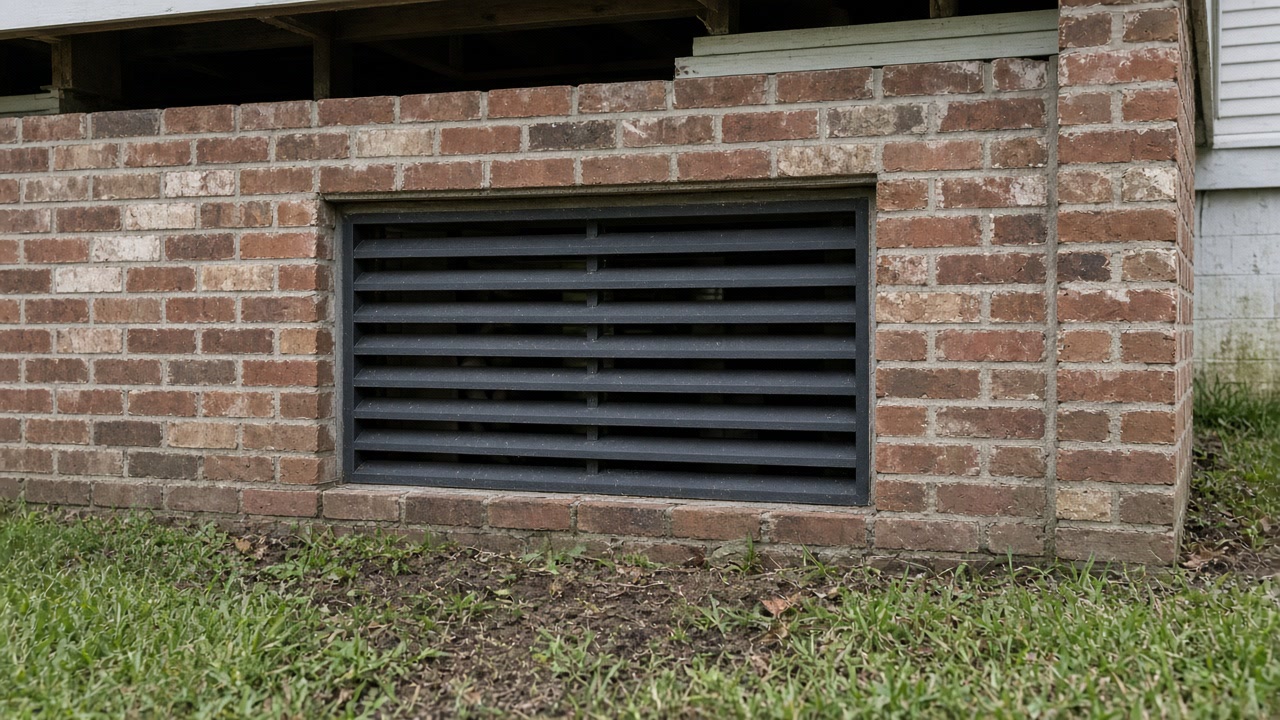
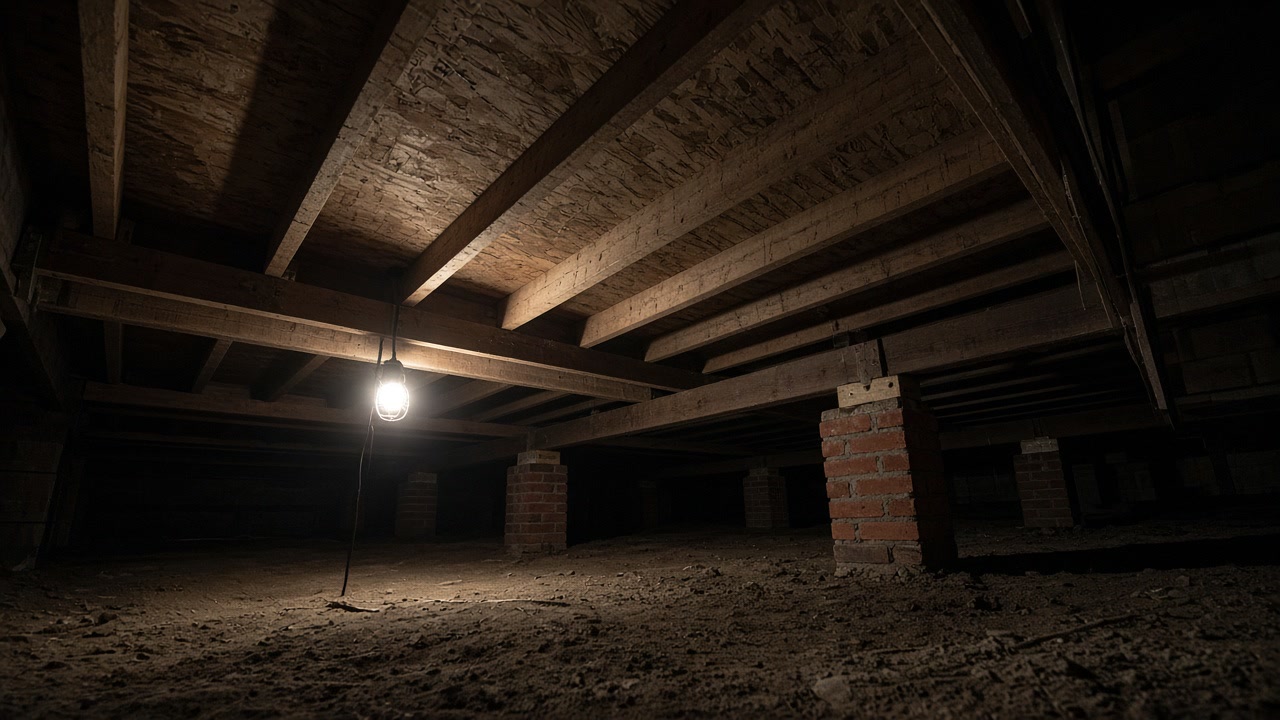
- Drying under a raised house: joists, subfloor, wet insulation, ground cover, and the foundation openings that decide how fast that space recovers
- Cavity drying through small openings and injection where the water is inside a wall, rather than opening the whole wall to reach it
- Air handler and duct checks, since a system pulling on a wet crawl space or a wet return puts the moisture everywhere else in the house
- Daily readings taken against a dry standard from an unaffected part of the same building, so the job ends on a number instead of an impression
- Controlled removal of material the clock already decided against, with the reasoning written down rather than asserted
- Advice on flood-rated foundation openings and ground cover where the space under the house is the source rather than the casualty
- Photographs, readings and a dated log written so an insurer or a landlord can follow it without having been there
What separates a dry out from a strip out here
Two houses with the same inch of water on the floor can be two very different invoices. What separates them is how many hours it has been sitting, what it arrived through, and what the floor is built on.
How many hours it has been
The EPA states that if wet or damp materials or areas are dried 24 to 48 hours after a leak or spill happens, in most cases mold will not grow. The clock starts when the water arrived, not when you noticed it, which is why a slow supply leak found on day nine is a different job from a burst line found this morning. Nothing else on this page changes the price as much as this one number.
Which month it happened in
The single most common piece of advice after a leak here is to open the windows and let it dry out, and in summer it is wrong. Mean relative humidity at the airport station is 88 percent at six in the morning and 76 percent for the year, and the mean dew point is 75.2F in July. Air at that dew point is already saturated at 75F, so it cannot take water out of your floor. Summer drying is a closed house and machinery, which means equipment, which means cost.
What the water arrived through
Clean water from a supply line, water off a roof, and water that came in off the street are three different scopes with three different rules about what can be kept. That last case is not unusual here: the utility publishes the point at which its own system is outpaced, about half an inch an hour once the network fills, in a metro that normally receives 63.35 inches of rain a year and records 73.4 thunderstorm days.
Whether the house is raised or on a slab
On a raised house the water that matters is often under the floor rather than on it, and federal guidance is explicit that in a humid climate open vents feed warm outdoor air into a space the air conditioning above is holding cooler, so it condenses on the joists. On a slab, water moves through the concrete into the bottom plate and the drywall above it, and drying the visible floor does nothing for the wall. The equipment plan is different in each case.
What the floor covering is
The EPA advises against installing carpet where there is a perpetual moisture problem, and specifically against carpet on concrete floors subject to leaks or frequent condensation. That names the standard post-war slab in this metro. If a slab has sweated or taken water before, the honest answer may be that the carpet is not being dried, it is being replaced with something else.
Whether the power is on and staying on
Drying is machinery, and so is the city's drainage: the Sewerage and Water Board runs 120 pumps across 24 stations and says that fully running the system takes 52 megawatts. A long outage with heavy rain is the flooding scenario here rather than rainfall volume alone, and it is also the scenario in which your own dehumidifiers stop. Where power is unreliable, the plan has to say what happens if it drops.
Whether this address has taken water before
The federal multiple loss property dataset lists 24,518 addresses across the six parishes covered here. If yours is one of them, the rebuild half of the job should be specified in flood damage resistant material rather than ordinary finishes, and that is particularly true in Laplace, which sits outside the completed risk reduction system while the West Shore Lake Pontchartrain project is still under construction.
Whether the repair will cross half the value of the structure
In New Orleans, work exceeding 50 percent of the value of the structure requires a sealed benchmark certificate from a registered land surveyor, and turns the job into a substantial improvement that has to meet current flood elevation rules. A whole lower floor after a bad event can get there. It is much cheaper to have the calculation done before the work starts than to discover it halfway through.
Still inside the window? Then this is a drying job
Send us the hour it got wet and where it came in. That is usually enough for us to say whether the material can be saved. There is no obligation in asking.
From the first call to the dry reading that closes it
Stop the water, then cut the power to the wet area
A valve, a breaker, and only then anything else. If it came off the street or out of a drain line, treat it as contaminated until somebody says otherwise, and keep people and pets out of it.
Keep the house closed, and say so to everyone who arrives
The instinct is to throw the windows open. In this climate that brings water in: 88 percent mean relative humidity at six in the morning is not air that dries anything. Shut the house, run the air conditioning, and let the dehumidification do the work.
Get the standing water and the soaked porous material out
Extraction first, then carpet, pad, wet insulation and anything absorbent that is already beyond the clock. The EPA expects absorbent and porous materials that became moldy to be thrown away, and the earlier that call is made the less of the structure it touches.
Map the wet area before the equipment goes in
Meters and thermal imaging, room by room, with the readings written down and dated. The wet area is nearly always larger than the visibly wet area, and on a slab it runs up into the wall. Equipment placed against a map dries a building; equipment placed by eye dries a floor.
Dry to a standard, not to an appearance
The target is a reading taken from an unaffected part of the same building, because a dry wall in New Orleans in August does not read the same as a dry wall in a drier city. That comparison is what makes the number mean anything.
Read it every day and keep the log
Daily readings, dated photographs and a note of what moved. This is the record an insurer, a landlord or a buyer will want, and it is far easier to keep as you go than to assemble afterwards from memory.
Make the keep-or-remove call at the 48 hour mark
Anything still wet at that point is a different and more expensive problem than the same water was on day one. Deciding it deliberately, with readings behind it, is what stops a drying job drifting quietly into a removal nobody priced.
Hand off to an assessment if something has already grown
Once there is growth, the next step is a survey and a written scope from a firm that will not be doing the removal, because Louisiana makes it a violation for a mold remediation contractor to do both on one property. Drying and remediation are different work and they are deliberately in different hands here.
What water damage drying looks like

What a dry out hands on, and when you need nobody
When you may not need this at all
- If a small amount of clean water got in, you found it within a few hours, and you can run a fan and a dehumidifier on it with the house shut, you very likely need nobody. The EPA's own position is that material dried within 24 to 48 hours will in most cases not grow mold. Take photographs first, then dry it, then check it with a meter in a week.
- If the room is damp every summer and has never had a leak, that is condensation rather than water damage and no amount of drying equipment fixes the cause. Put a hygrometer in it, close the house and run a dehumidifier. The EPA target is below 60 percent indoors and the CDC's is no higher than 50, and you will not reach either by ventilating with outdoor air here.
- If the water is still arriving, the first call is a plumber, a roofer or whoever owns the failed component, not a drying company. Drying a building that is still being fed is paying twice for the same job.
- If it has been weeks and something is already growing, this is not a drying job. Start with an assessment, because what you now need is a written scope and a measured area, and a drying crew cannot lawfully be the firm that also assesses it above the statutory threshold.
- If you rent, or if you are going to make a claim, document before anything is removed. Photographs with dates, a note of when the water arrived, and a meter reading if you can manage one. In Gretna, Terrytown and New Orleans roughly half of occupied homes are rented, and the tenant is usually the only person in the building when the water arrives.
What is out of scope
- The plumbing, roofing or drainage repair that closes the source. It is arranged where you want it arranged, and it is a separate trade with a separate price.
- Mold assessment and the written scope that follows one. Once growth is established, that goes to an assessing firm that will not be doing the removal.
- Remediation of growth that is already there. Drying a building and removing what has grown in it are different scopes, and above seven thousand five hundred dollars the second one requires a state license the first does not.
- Elevation, floodproofing and permanent drainage work. Those are design projects with their own engineering and their own permits.
- Structural repair and reconstruction beyond what was removed to dry the building.
- Handling or negotiating an insurance claim. The readings, photographs and log are provided, and what you do with them is yours.
- Sewage and heavily contaminated water, which is scoped on its own with its own protective measures rather than folded into a clean water dry out.
- Any opinion on health, symptoms or diagnosis.
Drying work arranged across the New Orleans metro
- Water Damage Drying in New Orleans
- Water Damage Drying in Metairie
- Water Damage Drying in Kenner
- Water Damage Drying in Gretna
- Water Damage Drying in Harvey
- Water Damage Drying in Marrero
- Water Damage Drying in Chalmette
- Water Damage Drying in Slidell
- Water Damage Drying in Terrytown
- Water Damage Drying in Westwego
- Water Damage Drying in River Ridge
- Water Damage Drying in Arabi
- Water Damage Drying in Covington
- Water Damage Drying in Laplace
The questions that come in while the floor is still wet
Can I just open the windows and let it dry out?
Not here, and this is the single most useful thing on the page. The EPA asks for indoor relative humidity below 60 percent. The airport station's normals put the annual mean at 76 percent and the six in the morning mean at 88 percent, with a July mean dew point of 75.2F, and air at a 75.2F dew point is already saturated at 75F. So there is no hour of a summer day when outdoor air will bring a room under the EPA figure. Opening the house imports water. Close it, run the air conditioning, and put a dehumidifier in the room.
It has already been three days. Is it too late?
Not too late to matter, but the job has changed. The EPA window is 24 to 48 hours, and past it the question moves from what can be dried to what has to come out. Wet insulation, carpet pad and the lower band of drywall are usually the first things decided against. Get readings taken now anyway: the difference between wet framing and wet finishes is the difference between a strip out and a removal, and it is a difference nobody can see.
Does the drywall have to come out?
It depends on how long it was wet, how far up the water went, and what is behind it. On a slab, water wicks up through the concrete into the bottom plate and the board above, so the wet band is higher than the tide line you can see. Insulation behind it holds water far longer than the board does. A meter answers it in minutes and guessing gets it wrong in both directions, which is why the mapping happens before the saw comes out.
The street floods a few times a year. Is that normal here?
It is expected, and the utility says so itself. The Sewerage and Water Board states that once its system fills it can move about half an inch of water an hour, and that rainfall exceeding an inch in an hour will most likely outpace it, in a city with a normal annual rainfall of 63.35 inches and 73.4 thunderstorm days. Rainwater here is lifted out by 120 pumps needing 52 megawatts, so a long power outage with heavy rain is the scenario to plan for rather than rainfall on its own.
When is the drying job actually finished?
When a meter says so, compared against an unaffected part of the same house, and not when the room looks dry or smells better. A reading taken in isolation means very little in a metro where the outdoor dew point sits in the seventies for two months of the year; a reading compared with a known dry part of the same building means a great deal. Ask for the dry standard and the daily log, and keep both.
Should I be documenting this for insurance?
Yes, and from the first hour, before anything is moved. Dated photographs, when the water arrived, where it came in and what it reached. Nearly twenty-five thousand properties across these six parishes are on the federal multiple loss list, so claims here are not rare and the records are worth having. We provide the readings, the photographs and the log. What we do not do is read your policy or argue the claim for you.
Tell us the state of the room right now
When the water arrived, how it got in, and what is still damp. Two sentences is plenty to start with, and a person reads every one.